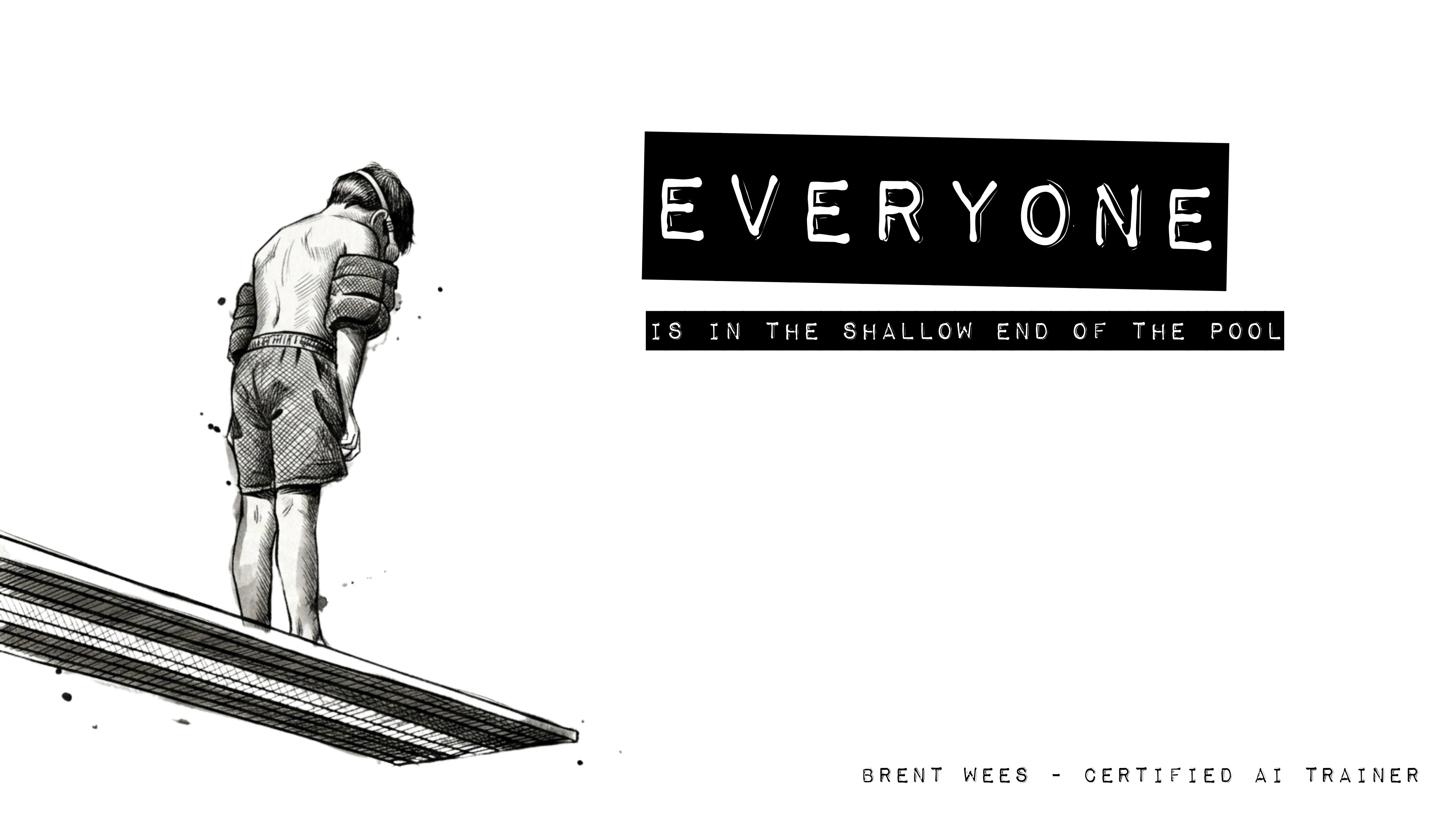
Everyone is in the shallow end
“In the last year I've been in dealership training rooms from one end of this country to the other. And I see the same thing every time. The enthusiasm is real. The speed is real. And the gap between those two things is also very real.”
Staff want to move fast. Dealers want results yesterday.
The tools are accessible. The instinct to experiment is good.
But most of what I see being done with AI is surface-level , rephrasing emails, generating social captions , and the people doing it don't have a framework for going deeper.
That's not a criticism. It's a starting point. And it's exactly where this conversation needs to begin.
The vendor-led adoption problem
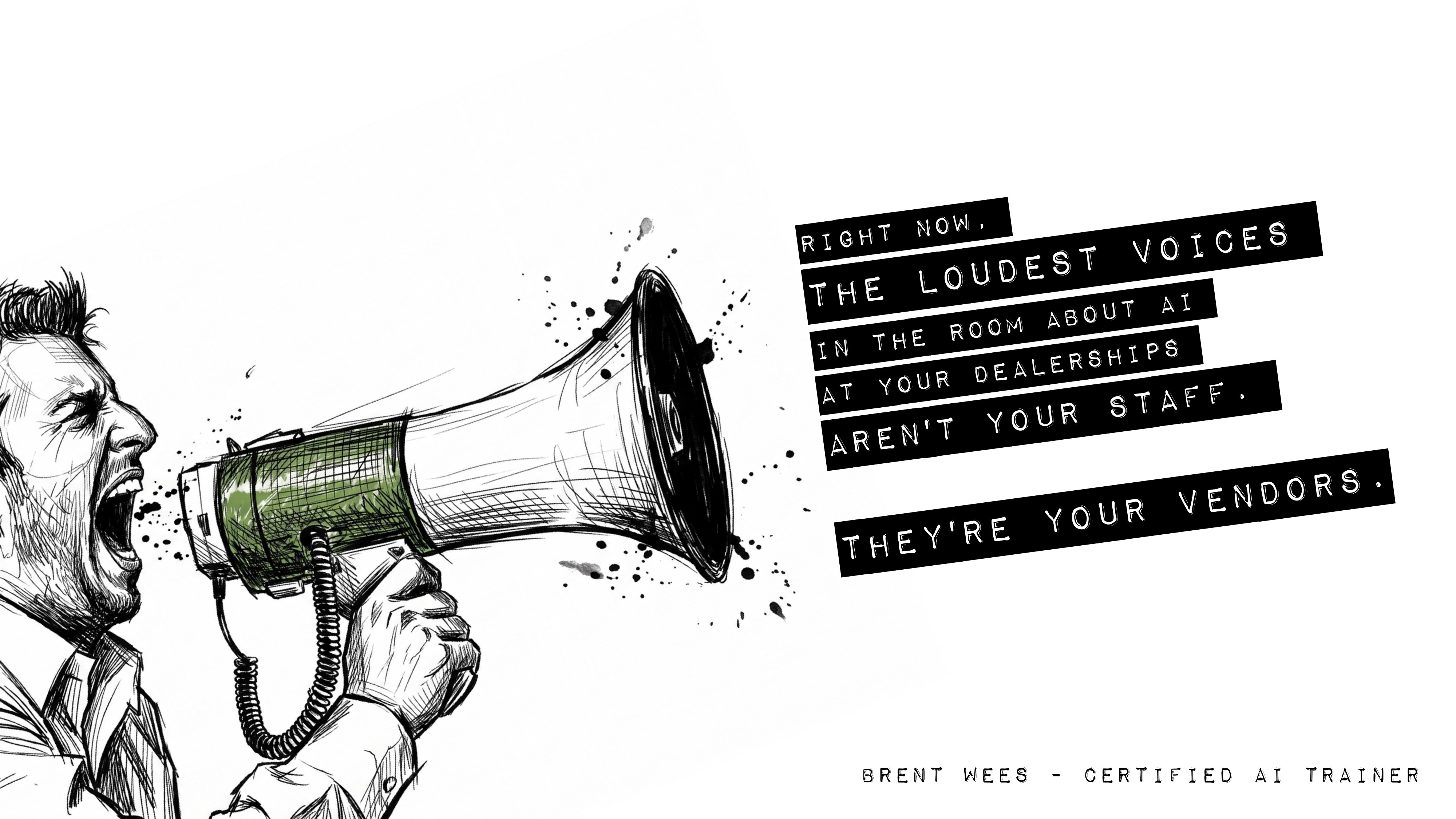
“Right now, the loudest voices in the room about AI at your dealerships aren't your staff. They're your vendors.”
Every major DMS, CRM, inventory platform, and agency has an "AI feature" now. Some are genuinely useful. Some are rebranded automation. Some are early and incomplete.
Dealers are being asked to make budget decisions , subscription upgrades, new platforms, bolt-on tools , before they have the foundational literacy to evaluate what they're actually buying.
The result: money moves. Adoption doesn't.
This isn't a knock on vendors. It's a sequencing problem. The conversation got ahead of the capability.
The analogy that lands
You wouldn't hire a new BDC rep and immediately sign them up for a $30,000 CRM training program before they understand how to run a follow-up sequence. You'd start with the fundamentals.
What "novice" actually looks like
“Here's what I mean when I say the skill level is still novice. I don't mean people aren't smart. I mean they haven't yet learned how to define what they need before they type.”
The most common thing I see across roles , sales, service, marketing, management:
- People open an AI tool and type a vague request
- They get a mediocre output
- They conclude the tool isn't that useful
- Or worse , they accept the mediocre output and send it
The actual skill gap isn't AI. It's problem definition.
Before you can get value from any AI tool , vendor-built or general-purpose , you need to be able to answer:
- What is the specific task I'm trying to complete?
- Who is this output for?
- What does good look like?
- What should it never do or say?
That's not a technology skill. That's a thinking skill. And most people haven't been taught it because we've all been in a rush to "use AI."
This is where data safety lives too. The dealers and staff who haven't learned to define the problem clearly also haven't thought through what information they're putting into a prompt. Customer data. Deal terms. Unreleased inventory. These go in casually because no one has built the habit of asking: should this be here?
What literacy actually unlocks
“When I spend time on fundamentals , on how to structure a request, how to define the outcome, how to handle business data responsibly , the room changes.”
The "aha moment" pattern
- A service advisor who finally gets a genuinely useful response to a customer complaint draft , because they learned to give the tool context, tone, and a clear output format
- A sales manager who stops getting generic emails , because they told the tool who the buyer is and what the deal stage looks like
- A GM who uses AI to prep for a vendor meeting , pulling together talking points, competitive questions, a summary of what they already know , and walks into that room with more leverage than they've ever had
The literacy payoff isn't just productivity. It's judgment.
A dealer who understands how AI processes a request can:
- Ask better questions when a vendor demos a new feature
- Recognize when an "AI tool" is just a decision tree with a chat interface
- Evaluate whether a $500/month add-on is solving a real workflow problem or a phantom one
- Protect their business data because they understand what the model is doing with it
From vendor-led to literacy-led adoption
“I'm not saying stop buying AI tools. I'm saying change the order of operations.”
What this looks like in practice
- Before you approve a new AI vendor spend , ask your team to demonstrate what problem it solves. Not in a demo environment. In your workflow.
- Invest in baseline literacy for your people. A few hours. Not a week-long certification. Enough that they can define a task, structure a request, and know what not to put in.
- Let your staff's literacy level become your filter for vendor conversations. If your team can't articulate the business problem the tool is supposed to solve, you're not ready to buy it yet.
The competitive framing
“The dealers who are going to win with AI over the next three years aren't the ones who bought the most tools the fastest. They're the ones whose people know how to use them. That starts with one skill: defining the problem before you touch the tool.”